

How can I tell if Burmese jadeite jewelry is truly untreated Grade-A before buying?
Buying jade can be thrilling, but the terms can confuse you. To spot real jadeite jewelry, first know that jade is made of two minerals: jadeite and nephrite. Fine Burmese jadeite jewelry is rare and can have colors like green, lavender, blue-green, pink, black, or white.

Untreated Grade-A Burmese jadeite jewelry hasn't been bleached, dyed, or filled with resin. Its natural color can change within the stone, and you might see internal features under bright light. These signs help but don't prove it's untreated.
A genuine jadeite piece won't glow in the dark. Some bleached jadeite might glow blue-white under ultraviolet light. But, home tests have their limits. For top-quality Burmese jadeite jewelry, getting an expert's opinion and a trusted grading certificate is best.
Understand What Untreated Grade-A Burmese Jadeite Jewelry Means
Before you compare color or price, learn the trade terms. They describe the stone’s material, treatments, and long-term care needs. This basic knowledge also supports smarter Grade-A jadeite jewelry wholesale decisions.

Natural jadeite versus nephrite and imitation materials
Jadeite and nephrite are both called jade, but they are different minerals. Jadeite is often denser, at about 3.30 to 3.38, while nephrite ranges from about 2.90 to 3.03. Jadeite may also reach a Mohs hardness of 7.0.
Imitations can look convincing in photos. Sellers may offer serpentine, grossular garnet, prehnite, dyed quartz, chrysoprase, dolomite marble, or aventurine as jade. A report should identify jadeite clearly, not simply use the word “jade.”
What Grade A means for natural Burmese jadeite jewelry
Type A refers to genuine jadeite with no artificial bleaching, polymer filling, or dyeing. Natural cleaning and waxing may be accepted in trade descriptions because they do not change the stone’s internal structure.
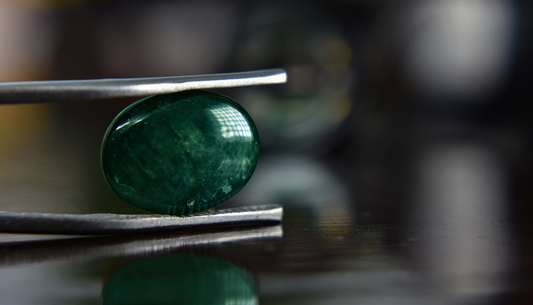
Natural burmese jadeite jewelry can show soft color shifts, mineral clouds, and fine internal patterns. These traits are not flaws by default. They can help show that the color and texture formed within the stone.
Why B-grade and C-grade jadeite need extra caution
Type B jadeite is real jadeite that has been bleached and then filled with polymer. The process can make a stone look clearer, yet the polymer may weaken or discolor with age. This can affect durability and value retention.
Type C jadeite has been heavily bleached and dyed to alter its color. Its bright tone may not remain stable with normal wear, heat, or cleaning products. Ask direct questions about treatment before comparing any offer.
- Type A: untreated jadeite, apart from accepted surface cleaning or waxing.
- Type B: bleached jadeite with polymer impregnation.
- Type C: bleached jadeite with added dye.
Key Visual Indicators for Identifying Real Grade-A Jadeite Jewelry
Visual checks can help buyers ask better questions before a purchase. Examine the gem in daylight and under a soft white light. Then, compare its color, texture, and finish.
Look for natural color distribution and internal structure
Natural jadeite often has gentle color shifts, fine grain, and cloud-like patterns. A high-icy floating flower jadeite landscape pendant may show green or gray “floating” areas. These follow the stone’s internal structure.
Be cautious of color that looks flat, overly even, or trapped in surface cracks. Round bubbles are also worth noting, as they may point to glass or another imitation material.
Assess translucency under proper lighting
Hold the piece near a clean light source without placing it directly against the bulb. High-ice transparency can reveal depth, soft glow, and internal texture. But, translucency alone does not confirm that jadeite is untreated.
A vivid green jadeite cabochon necklace may appear brighter near a window and deeper in indoor light. Review both views to see whether the green remains natural and balanced.

Check craftsmanship alongside the stone
Look closely at the polish, carving lines, prongs, and setting edges. Fine workmanship should support the jadeite without hiding key areas of color or texture.
Clean polishing can improve light return, while careful carving can make natural patterns easier to enjoy. But, assess the gemstone itself apart from the metalwork and overall design.
Use At-Home Observations Carefully Before You Buy
Simple checks can help you ask better questions before purchase. They cannot confirm whether jadeite is untreated. Use them as a first look, then rely on a trusted national grading certificate.
Listen to the jade sound test without treating it as proof
A gently tapped bangle may give a clear, bright ring. Many buyers associate this sound with a compact natural crystal structure. But, sound changes with the bangle’s shape, thickness, and the object used for tapping.
A three-colour jadeite bangle may sound different across its wider and thinner areas. Treated jade can produce a flatter tone, yet this test does not prove treatment status. Never strike jade hard or tap it against metal.
Notice weight, coolness, and surface feel
Jadeite often feels substantial for its size because it has a high density. It may also feel cool when first held. Plastic and glass copies can warm faster in the hand, though room temperature affects this check.
Look closely at the polish as well. A natural jadeite donut bracelet should feel smooth, with no sticky coating, rough seams, or obvious mold marks. These details help separate careful craftsmanship from common imitation clues.
Avoid destructive scratch, heat, and chemical tests
Do not use keys, blades, flames, acetone, or household cleaners as buying tests. Steel is softer than jadeite, but a scratch test can harm the polish, expose weak areas, or damage a lower-quality stone.
Heat and chemicals can affect wax, adhesive, color, and metalwork. They are risky for an 18k gold diamond jadeite setting, where stones and delicate prongs need professional care. Ask for clear photos, a live inspection, and certificate details instead.
Demand a National Grading Certificate for Fine Burmese Jadeite Jewelry
A national grading certificate proves what was tested. It should match the exact jadeite piece, not just a similar design or a stock photo.
Details to verify on a jadeite certificate
Look for the report number, photos, weight, dimensions, shape, and color notes. The document should say the material is jadeite and if any treatment was found.
For a pendant in an 18k white gold diamond setting, compare the report image with the stone’s carving, mounting, and visible inclusions. Small details can help confirm the match.
Know when third-party re-testing is appropriate
Third-party re-testing is wise for high-value purchases or if paperwork seems incomplete. It's also good when the certificate photo, measurements, or report number does not match the item offered.
An independent gem laboratory can test the jadeite itself. Expert review is useful when a seller makes strong claims about untreated Grade-A material.
Certificate language that deserves follow-up questions
Ask questions if a national grading certificate does not name the laboratory, list item-specific measurements, or explain treatment results. A report that cannot be verified by its number also needs closer review.
Clear records support a careful buying process. Request the original document before payment and keep it with the jewelry for future reference.
How to Spot Red Flags in Photos, Unrealistic Prices, and Sales Claims
Photos can make jadeite look clearer or greener than it is. Bright lights, intense color settings, and tight angles may hide cracks, cloudy areas, or uneven color. To spot real jadeite, ask for images in normal daylight and clear videos from several angles.
Natural jadeite can be pale green, deep green, blue-green, lavender, pink, white, blackish, or yellowish gray. Green is often in high demand, but a perfectly even color in every photo deserves a closer look. Appearance alone cannot prove that a stone is untreated.
- Prices far below similar pieces without a clear reason
- Claims such as natural with no item-specific certificate
- Refusal to show the back, edges, or internal features
For fine burmese jadeite jewelry, request the grading certificate, weight, dimensions, and unedited inspection video. In b2b jadeite procurement, clear records and consistent sales details help buyers compare offers with care.
Evaluate Direct-From-Source Jadeite Supplier Transparency
When buying fine jadeite from overseas, clear access is key. A trustworthy direct-from-source jadeite supplier should show where each piece comes from. They should explain how it was chosen and provide proof.
Ask for a 1-on-1 live video jadeite inspection
A 1-on-1 live video jadeite inspection lets you see the actual piece, not just photos. Ask to see it in daylight and indoor light. Then, compare its color, texture, flaws, and setting with the listing and certificate.
During the call, ask for close views of the jadeite’s edges, back, and drilled areas. These details can reveal natural features that photos might hide.
Compare worldwide pricing and wholesale terms
Ask for the exact item price, order minimum, payment method, shipping duty, and return terms. A pingzhou jadeite jewelry wholesaler should also state if a national grading certificate is included. Ask when independent re-testing can happen.
- Confirm who handles shipping insurance and customs paperwork.
- Ask whether the same item has one clear worldwide price.
- Get return conditions in writing before payment.
Verify the seller’s sourcing and showroom access
A direct-from-source jadeite supplier should clearly describe its inventory access and inspection process. Request a live look at the showroom, available stock, or the handoff process for certified pieces.
A pingzhou jadeite jewelry wholesaler with open showroom access makes it easier to check that the item, certificate, and quoted terms match before a purchase is finalized.
Source With Confidence Through Linlana Jadeite
Linlana Jadeite makes it easy to buy natural jadeite with clear steps from picking to getting certified. It was started by Ms. Shi Jiu, a native of Yunnan. She has over 10 years of experience in China's top jade markets.
Her company helps buyers find reliable jadeite and builds a lasting partnership.
Private Showroom Access in Pingzhou
Each private showroom in Pingzhou Jade Street lets buyers see fine Burmese jadeite jewelry up close. They can see high-icy floating flower pendants and vibrant green cabochon necklaces. Seeing the stone's color, texture, and polish in person helps make better choices.
Clear Pricing and Live Viewing
Linlana Jadeite offers 1-on-1 live video consultations for those who can't visit Foshan. Buyers can see jadeite under direct lighting and ask questions. The company's one price worldwide transparency makes comparing easier.
Documentation That Supports Trust
Fine pieces from Linlana Jadeite are 100% natural Grade-A Burmese jadeite jewelry. They come with national grading certificates. These documents confirm the stone's identity and treatment before a purchase.
This process strengthens the buyer's relationship with Linlana Jadeite.